Phoenix
RPL's flagship liquid bi-propellant rocket
Technical Specifications
- Height
- 15 ft / 4.57 m
- Diameter
- 8.056 in / 20.5 cm
- Maximum Speed
- Mach 1.3
- Dry Mass
- 100 lb / 45.4 kg
- Apogee Height
- 30,000 ft / 9,144 m
- Propellant
- LOX / LNG
- Maximum Thrust
- 600 lbf
- Next Milestone
- Next static fire: Fall 2026
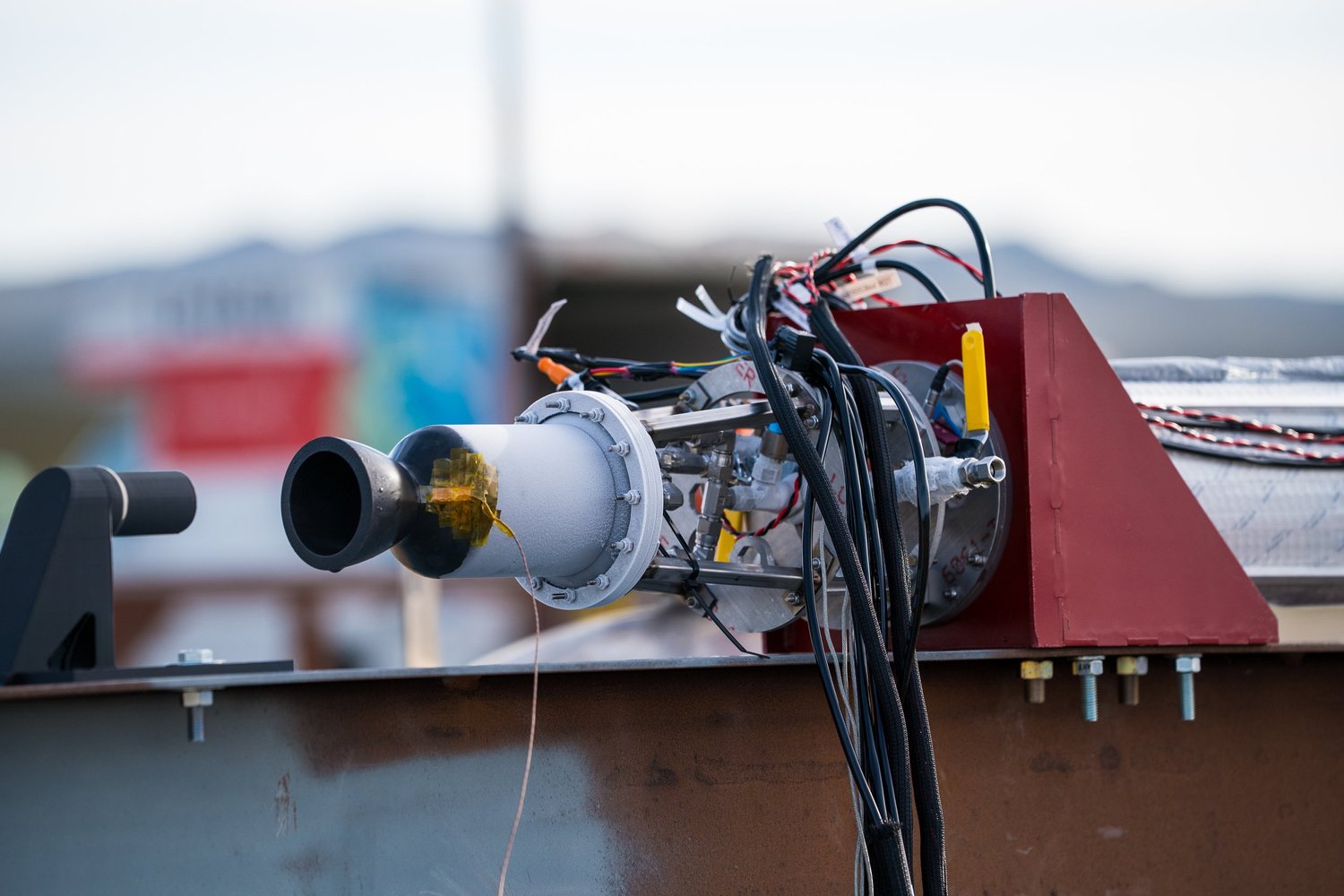
Phoenix is Rocket Propulsion Laboratory’s liquid rocket. Using a liquid methane and liquid oxygen propellant mixture, Phoenix aims to demonstrate the viability of launch vehicles that use propellants manufacturable on the surface of Mars.
Phoenix will participate in the Friends of Amateur Rocketry’s Dollar Per Foot (FAR-DPF) competition in Spring 2027.
Fawkes Engine
Phoenix will be powered by RPL’s student-developed Fawkes engine. Fawkes will provide 600 lbs of thrust and its chamber temperature will reach 3225 K. At T+15 seconds, Fawkes will accelerate the rocket past the sound barrier, and continue accelerating to Mach 1.3.
Recovery
The recovery subteam focuses on the reliable deployment of the vehicle’s parachute system. At apogee, precise nose cone separation initiates the sequence. A drogue parachute stabilizes the vehicle, and at 1,000 feet the main parachute decelerates it to a safe landing velocity.
Structures
The Structures subteam is responsible for the structural integrity of the rocket, designing and manufacturing the internal airframe, the aluminum and fiberglass outer shell, and the fins.
Fluids Systems
The Fluids Systems subteam transports liquid oxygen and liquid methane from the tanks to the engine at the right pressures and flow rates, and runs pad operations for cold flows, static fires, and launch.
Propulsion
The propulsion subteam designs, develops, and tests RPL’s liquid bipropellant engines, and is developing the next liquid engine and a test stand for more frequent hot fires.
Avionics
The avionics subteam owns the flight computer, the ground station, and the communication between them, and is working alongside the Software team to implement all necessary Firmware.